Choosing Gym Equipment in 2026 is less about buying the newest machine and more about matching reliable tools to real training needs. A compact apartment setup has different demands from a busy commercial gym. Before comparing models, consider who will use the equipment, how often, and how much floor space is genuinely available. A treadmill that blocks a doorway is not a smart investment.
Industry data offers useful context, but it cannot make the decision for you. The American College of Sports Medicine’s 2025 Worldwide Survey of Fitness Trends, based on responses from fitness professionals, ranked wearable technology first and traditional strength training among the leading trends. That points to a practical mix: measurable activity and dependable resistance work. It does not mean every buyer needs a connected screen or a full rack of weights. Rankings are not shopping lists.
Start with the basics. Check the frame’s stability, adjustment range, weight capacity, warranty, and access to replacement parts. Try the movement pattern if possible; a bench that wobbles or a cable handle that feels awkward can quickly become unused equipment. Then compare the full cost, including delivery, installation, and maintenance. A low price can hide trade-offs. I would also leave room to revise the plan: training goals change, and even careful buyers sometimes misjudge what they will use. The best choice is the equipment that fits your space, supports safe progression, and earns a regular place in your routine.
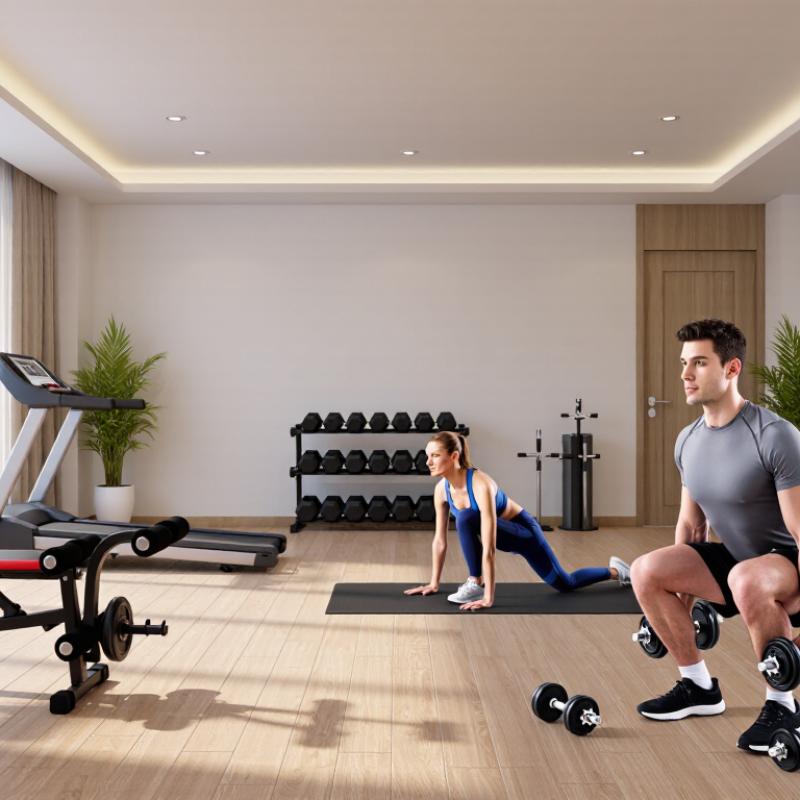
Choosing gym equipment starts with an honest schedule. The American College of Sports Medicine’s 2021 Guidelines for Exercise Testing and Prescription recommend strength training two to three days weekly for novice and intermediate adults. The World Health Organization’s 2020 guidelines call for strengthening all major muscle groups on at least two days each week. These recommendations make consistency more useful than a crowded equipment list.
Choose tools that support repeatable sessions: adjustable resistance, a stable bench, or a clear floor space for body-weight moves. ACSM identifies 8–12 repetitions per set as a practical range for many beginners. A pair of dumbbells may cover presses, rows, and squats; add equipment only when your routine exposes a real limitation. Even a tidy plan can unravel during a busy week. I may be overvaluing variety when the bigger challenge is showing up.
Tips: Schedule two sessions first. Keep equipment visible and easy to reach. Track sets and repetitions in a notebook; when you can complete the target range with steady form, consider a small increase in resistance. Stop if pain changes your movement.
Before comparing gym equipment types, measure the room you will actually use, not just its advertised floor area. Mark the equipment footprint with painter’s tape, then leave space for movement, access, and safe use. That matters. A treadmill needs room behind it, while adjustable weights need a clear area for lifting. Check doorways, ceiling height, and whether equipment must be folded or stored after each workout. I still find storage easy to underestimate.
Tips: Write down your room dimensions and maximum budget before browsing. Include delivery, floor protection, and likely maintenance costs. Keep a small reserve; unexpected expenses happen.
Next, match equipment to your routine and available space. A compact bench and adjustable dumbbells may suit varied strength sessions, while a cardio machine can take up more permanent room. Compare the usable features, not just the number of settings. If you share the space, consider noise and how quickly equipment can be put away. Try sketching a simple floor plan with doors and furniture included. It may look obvious on paper, but tape-measuring twice can prevent a costly mismatch.
Choosing equipment is easier when the weekly target comes first. ACSM guidance recommends at least 150 minutes of moderate-intensity aerobic activity each week for most adults. That could mean five 30-minute sessions on a stationary bike, treadmill, or elliptical. Use the talk test: you should be able to speak, but not sing. Keep it realistic. A machine that feels comfortable and easy to adjust may get used more often than an impressive one that gathers dust.
Free weights and resistance machines support strength training, which complements aerobic exercise but does not replace those 150 minutes. Dumbbells allow varied movements, while machines can guide your range of motion and make load changes simple. Start with a weight you can lift with steady control; stop if your form starts to slip. Two weekly strength sessions can fit around cardio days, though recovery needs vary.
A useful setup might include one cardio option you enjoy, a few adjustable weights, and access to basic resistance machines. Check that handles fit your grip and that you can change settings without awkward reaching. Plans rarely unfold perfectly. If a busy week cuts a session short, add a brisk walk or another manageable bout rather than abandoning the schedule.
ASTM F2276 sets design and performance requirements for fitness equipment. Treat it as a practical screening tool, not a guarantee that a machine suits your body or room. Ask for documentation showing which standard and edition the equipment was tested against. Then inspect the details yourself: does the frame rock on a level floor? Do cables move smoothly? Can fingers reach pinch points near hinges or weight stacks? Check the user-weight limit, adjustment range, and safety instructions before buying. Small checks matter.
The ACSM 2025 Worldwide Fitness Trends survey ranked wearable technology as the year’s top fitness trend. That popularity makes screens and workout metrics easy to notice, but a bright display cannot confirm stable construction or safe movement. CPSC’s NEISS injury-surveillance reports also track emergency-department cases involving exercise equipment; consult current product-category data when weighing risk. Numbers can mislead. In person, set the seat to your height and try a slow, controlled repetition. Watch for wobble, abrupt stops, or joints that force an awkward reach. A standard cannot tell you whether the machine feels right, and I would not treat a seller’s “ASTM compliant” claim as proof without supporting test documentation.
Connected features can make gym equipment more useful, but only when they support a clear training goal. A wrist sensor paired with a treadmill can show heart rate, pace, and recovery without forcing you to guess. That matters. Yet a bright console may distract more than it helps, especially during an easy run.
ACSM’s 2025 Worldwide Fitness Trends survey, published in ACSM’s Health & Fitness Journal, ranked wearable technology No. 1. The survey reflects fitness professionals’ views on industry trends; it does not prove that every connected machine improves results. Treat the ranking as a signal of demand, not a buying instruction. It is a useful distinction.
Compare equipment by checking whether it pairs with common heart-rate sensors, records sessions consistently, and exports usable workout data. Try a five-minute test: change pace, pause, then check whether the recorded session matches what happened. Ask what data is stored and whether basic controls work without a paid subscription. If syncing fails in the showroom, expect friction at home. I would still choose a sturdy frame and comfortable movement over another dashboard. Not glamorous, perhaps, but practical.
Aim for two or three sessions weekly. Two is a useful starting point.
Adjustable dumbbells, a stable bench, or clear floor space can cover many exercises. Start with what you will actually use.
Eight to twelve repetitions is a practical range for many beginners. Keep each movement controlled.
Aim for at least 150 minutes of moderate activity each week. Five 30-minute sessions can fit that target.
Try the talk test. You should be able to speak, but not sing.
No. Machines and free weights support strength training, but they do not replace weekly aerobic activity.
Consider a small increase when you complete the target repetitions with steady form. Don’t rush it.
Add a brisk walk or another manageable session when possible. Plans wobble; that is normal.
Stop if pain changes how you move. A lighter load may help, but guessing is not always wise.
Choosing the right Gym Equipment in 2026 starts with your training goals. A practical strength routine can be built around two or three sessions per week, while your available space and budget help narrow down the options. Compare machines, free weights, and cardio gear based on how they support your preferred exercises and fit your home or training area. For cardiovascular fitness, consider how your equipment choices can help you work toward 150 minutes of moderate activity each week.
Before buying, check that equipment fits your body and can be used safely. Look for clear setup instructions, stable construction, and features that align with applicable fitness-equipment safety standards, including ASTM F2276. Connected features may also help you track progress and stay consistent; wearable technology was ranked the leading fitness trend for 2025. Choose equipment that is comfortable, manageable within your budget, and suited to a routine you can maintain.