Choosing the best Commercial Gym Equipment in 2026 is not about filling a room with impressive machines. It is about matching each purchase to member needs, available space, service support, and the budget for long-term upkeep. A crowded strength floor may need durable racks and adjustable benches more than another specialty machine. A small studio may value compact, versatile equipment. The right choice depends on who trains there.
Strength and conditioning coach Mike Boyle is often quoted saying, “Everything works for six weeks, nothing works forever.” That thought applies to equipment planning: useful gear still wears, and training needs change. This guide compares cardio machines, strength equipment, free weights, and functional training tools. It also considers construction, warranties, maintenance, accessibility, and total ownership cost—not just the purchase price. Small details matter. Check how a treadmill feels at a realistic pace, whether a selector pin moves smoothly, and how much clearance a rack needs when loaded. Ask suppliers about replacement parts and service response times, then verify the terms in writing. A showroom demo is helpful, but it cannot predict every repair or member preference. That limitation deserves attention. No single shortlist fits every facility, and even careful planning can miss something. The aim is a practical buying framework for 2026, grounded in specifications and day-to-day operating realities, so owners can compare options without treating marketing claims as proof.
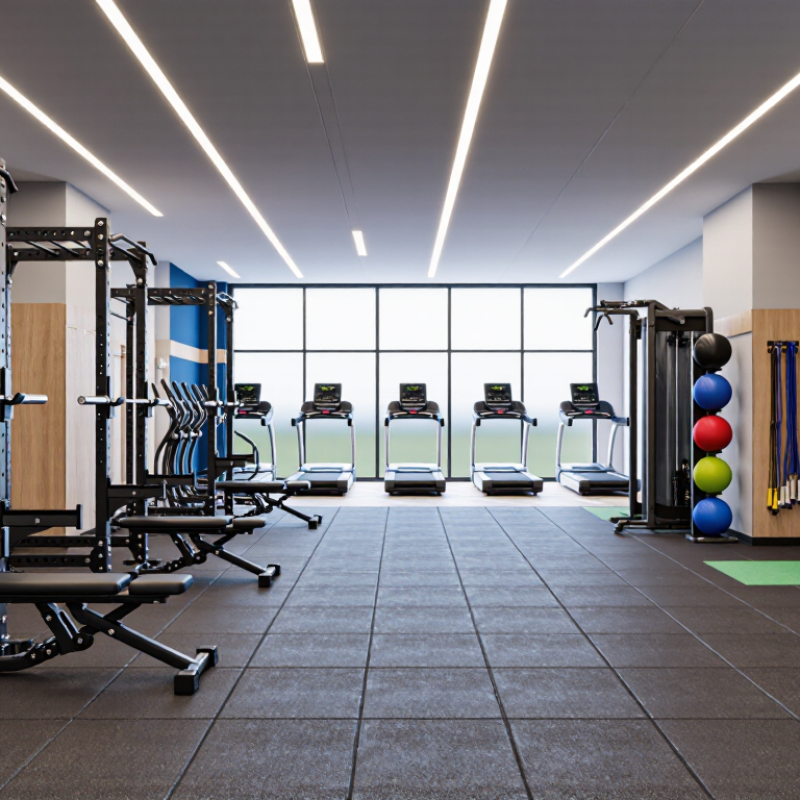
How Commercial Gym Equipment Is Defined and Classified
Commercial gym equipment is best understood as equipment designed for repeated use in shared fitness facilities, not as one specific machine type. There is no single universal definition. Buyers usually classify it by function: cardiovascular machines, selectorized resistance machines, plate-loaded equipment, free weights, and functional-training tools. A treadmill belongs to cardio; an adjustable cable station supports several resistance exercises.
The label “commercial” needs checking. Look at stated usage ratings, frame construction, adjustment points, maintenance access, and available floor space. A heavy frame alone tells little. HFA’s 2024 Global Report counted 72.9 million U.S. health-club members in 2023, indicating the scale of potential facility use. ACSM’s 2025 Worldwide Fitness Trends survey ranked traditional strength training fifth. That supports considering resistance equipment, but not buying the same mix for every gym. Think about actual users: a busy training area may need easy-to-adjust seats, clear walkways, and equipment that staff can inspect quickly. I would not treat “commercial” as a guarantee; it is a claim to verify.
What Is the Best Commercial Gym Equipment to Buy in 2026? — How Commercial Gym Equipment Is Defined and Classified
Commercial gym equipment is designed for repeated use in shared facilities such as health clubs, hotels, schools, and recreation centers. The best choices depend on the facility’s users, available space, training programs, accessibility needs, maintenance capacity, and total cost of ownership.
| Equipment Classification | Examples | Primary Training Use | Commercial-Grade Features to Assess | Space and Facility Considerations | Best Fit for |
|---|---|---|---|---|---|
| Cardiovascular machines | Treadmills, stationary bikes, ellipticals, rowing machines, stair climbers | Aerobic conditioning, warm-ups, and general fitness | Duty rating, frame stability, user-weight capacity, accessible controls, service access, and replaceable wear parts | Allow clearance around moving parts and access for cleaning and maintenance; check floor loading and power requirements where applicable | Facilities serving a broad range of members and fitness levels |
| Selectorized resistance machines | Chest press, lat pulldown, leg press, leg curl, and cable stations with weight stacks | Guided strength training with adjustable resistance | Clear adjustment labels, smooth cable travel, secure weight-stack guards, sturdy upholstery, and accessible starting positions | Plan for user transfer, machine adjustment, and safe movement between stations | General fitness areas, beginner-friendly programs, and supervised training spaces |
| Plate-loaded strength equipment | Lever-based presses, rows, squat machines, and plate-loaded leg equipment | Progressive resistance using separate weight plates | Stable frame, secure plate-storage horns, durable pivots, smooth movement, and clear loading points | Provide room for loading plates and for users to enter and exit the machine safely | Strength-focused facilities with members familiar with free-weight loading |
| Free weights | Dumbbells, fixed barbells, weight plates, and adjustable benches | Strength, muscle development, and varied movement training | Durable finishes, secure construction, consistent weight labeling, and suitable storage racks | Use a designated lifting area with adequate circulation space and appropriate flooring | Most facilities, especially those offering versatile strength training |
| Racks and lifting platforms | Power racks, half racks, squat stands, and lifting platforms | Squats, presses, pulls, and other barbell exercises | Stable uprights, securely adjustable safeties, compatible attachments, and clearly stated installation requirements | Check ceiling height, anchoring needs, floor suitability, bar clearance, and safe lifting zones | Facilities with coached strength training or regular barbell use |
| Cable and functional-training systems | Dual adjustable pulleys, cable crossovers, and multi-station systems | Strength work across multiple angles, unilateral exercises, and movement training | Smooth pulley operation, secure adjustment mechanisms, durable cables, and clear attachment storage | Leave space for cable travel, attachments, and users moving around the station | Facilities needing versatile training options from a compact footprint |
| Bodyweight and suspension-training equipment | Pull-up stations, parallel bars, dip stations, and suspension anchors | Bodyweight strength, grip work, and scalable exercises | Secure installation, stable contact points, corrosion-resistant finishes, and appropriate user-load specifications | Confirm structural support for mounted equipment and maintain clear space beneath and around stations | Functional-training zones and programs using minimal external loading |
| Small training accessories | Kettlebells, medicine balls, resistance bands, mats, and foam rollers | Mobility, conditioning, warm-ups, and supplementary strength work | Durable materials, easy-to-read weight markings, cleanable surfaces, and organized storage | Use racks or storage zones to keep walkways clear and reduce trip hazards | Group exercise rooms, warm-up areas, and general-purpose training spaces |
| Group-exercise equipment | Indoor cycling bikes, step platforms, exercise mats, and studio-compatible strength accessories | Instructor-led cardio, strength, and conditioning classes | Adjustability across different users, stability, easy cleaning, and suitability for frequent room turnover | Consider class capacity, spacing between participants, storage, and room layout | Facilities with scheduled classes or dedicated studio space |
| Adaptive and accessible equipment | Accessible cardio machines, adjustable stations, and equipment with transfer-friendly layouts | Exercise options designed to accommodate a wider range of abilities and movement needs | Reachable controls, clear entry and exit paths, adjustable settings, and compatibility with the facility’s accessibility plan | Review circulation routes, turning space, access to controls, and applicable local requirements | Facilities aiming to support inclusive use across their member population |
FAQS
It generally means equipment designed for repeated use in shared fitness facilities. The label alone is not a guarantee.
Common categories include cardio machines, selectorized resistance machines, plate-loaded equipment, free weights, and functional-training tools. A treadmill is one cardio example.
Review usage ratings, frame construction, adjustment points, maintenance access, and available floor space. A heavy frame alone tells little.
Start with your members, room size, busy hours, class sizes, and skill levels. A catalogue cannot show how your space actually flows.
Durable stations with quick adjustments can help reduce queues. Clear walkways and easy inspection access matter too.
Compact, movable equipment can preserve open floor space. Check how quickly items can be stored between classes.
Assess rack availability, safe lifting space, weight ranges, and member demand. Strength equipment may be useful, but every gym needs a different mix.
Check replacement parts, cleaning access, noise, power needs, and staff training. Leave some budget for maintenance.
Observe traffic and station use during busy hours. Space matters. A neat layout may still create long waits. Forecasts can miss.
Conclusion
Choosing the best Commercial Gym Equipment in 2026 starts with understanding how commercial-grade products differ from home-use options. They are designed for frequent use, higher user turnover, and demanding facility environments. Before buying, assess your space, member profiles, training programs, expected traffic, accessibility needs, and available budget. These factors help determine the right mix of cardio machines, strength equipment, free weights, racks, benches, and functional training tools.
Compare options by evaluating performance, user safety, construction quality, ease of maintenance, warranty coverage, and total cost over time—not just the initial price. Equipment that is comfortable, adjustable, stable, and straightforward to service can support a better member experience and reduce avoidable downtime. The strongest value in 2026 comes from building a balanced, durable selection that fits your facility’s actual needs, leaves room for safe movement, and can adapt as membership and training preferences change.